

Best Drawing Supplies: Essential Art Tools for Beginners & Hobby Artists
Want to start drawing, improve your sketching skills, or refresh your art supplies? Having the right drawing tools can make your creative time more enjoyable.
Whether you love sketching flowers, drawing animals, creating portraits, doodling in a journal, or experimenting with colored pencils, you don’t need a huge collection of supplies to get started.
In this guide, we’ll explore useful drawing supplies, from graphite pencils and sketchbooks to colored pencils, fine-line pens, erasers, and blending tools. You’ll also find ideas for choosing art supplies that fit your creative style and budget.
This article contains affiliate links. As an Amazon Associate, I earn from qualifying purchases.
note this post contains affiliate links


Quick Guide: What Drawing Supplies Do You Need?
If you’re new to drawing, start with a few essentials:
- Graphite pencils for sketching and shading
- A sketchbook or drawing pad
- A good eraser
- A pencil sharpener
- Colored pencils or fineliners if you enjoy adding color and details
You can always expand your art collection as you discover what you enjoy drawing.
Premium Graphite Pencils
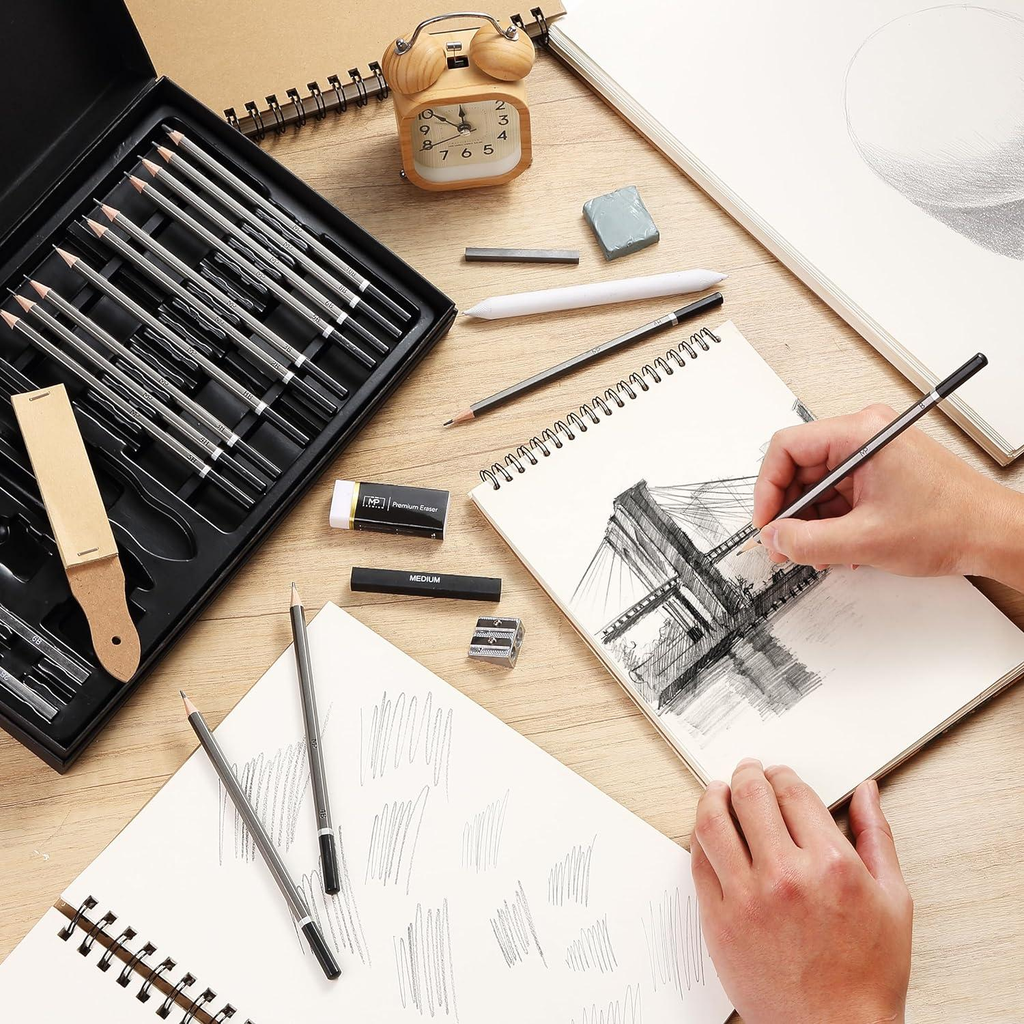
Graphite pencils are a wonderful starting point for beginners and experienced artists alike. They work well for everyday sketching, outlines, shading, and detailed drawings.
Faber-Castell 9000 Graphite Sketch Pencil Set
A pencil set with different hardness levels can give you more flexibility when sketching. Softer pencils are useful for darker marks and shading, while harder pencils can help with lighter lines and fine details.
Graphite pencils are the backbone of any artist’s toolkit. The top-selling brands on Amazon include:

- Faber-Castell 9000 Graphite Sketch Pencil Set: Renowned for their high-quality leads, these pencils offer smooth application and a wide range of hardness levels, from 6B to 4H.
Staedtler Mars Lumograph Graphite Pencil Set
Another option to consider if you want a range of graphite pencils for practicing different techniques, from light outlines to darker shading.
Drawing tip: Try drawing the same simple object with three different pencil grades. Notice how the lines and shadows change.

- Staedtler Mars Lumograph Graphite Pencil Set: Known for their durability and break-resistant leads, these pencils are perfect for detailed work and shading.
Sketchbooks and Drawing Paper
Your paper matters, especially when you start experimenting with different drawing techniques.
Canson XL Series Mix Paper Pad
A versatile paper pad to consider if you enjoy experimenting with multiple mediums. Check the specific pad’s paper weight and suitability for your intended materials.

Canson XL Series Mix Paper Pad: This sketchbook is popular for its versatility, allowing artists to use it for various mediums, including graphite, charcoal, and ink.
Strathmore 400 Series Sketch Pad
Worth considering if you’re looking for a sketching surface for more detailed drawings and shading.
Shopping tip: If you mainly use graphite pencils, a basic sketchbook may be all you need. If you use markers, ink, or wet mediums, look for paper specifically suited to those materials.

Strathmore 400 Series Sketch Pad: Favored for its fine tooth surface, this sketchbook is excellent for detailed drawings and shading.
Erasers Every Artist Should Have
Erasers aren’t just for fixing mistakes. They can also help create highlights and refine your artwork.
Pentel Hi-Polymer Block Eraser
A practical option for everyday graphite erasing and keeping sketches neat.

Pentel Hi-Polymer Block Eraser: This eraser is loved for its ability to remove graphite cleanly without damaging the paper.
A kneaded eraser is useful for gently lifting graphite and lightening areas of a drawing. It can be especially handy when working on shading and highlights.
Creative tip: Try lifting a little graphite from a shaded area to create a soft highlight.

Faber-Castell Kneaded Eraser: Ideal for lightening sketches and correcting small areas, this eraser is pliable and doesn’t leave residue.
Mechanical Pencils for Detailed Drawing
Mechanical pencils can be convenient for fine lines, small details, and consistent line work.
An option to explore if you prefer a precision-oriented mechanical pencil for sketching and technical drawing.

Pentel GraphGear 1000: Known for its precision and comfort, this mechanical pencil is perfect for detailed drawings and technical work.
Uni Kuru Toga Roulette Mechanical Pencil
Another mechanical pencil worth considering if you like a consistent, fine writing and drawing point. Check the lead size and model specifications before purchasing.
Remember that a regular graphite pencil can work beautifully, too. Choose what feels comfortable in your hand.

Uni Mechanical Pencil Kuru Toga Roulette Model: This pencil features a unique rotating mechanism that keeps the lead sharp and consistent, making it a favorite among artists.
Colored Pencils for Adding Beautiful Color
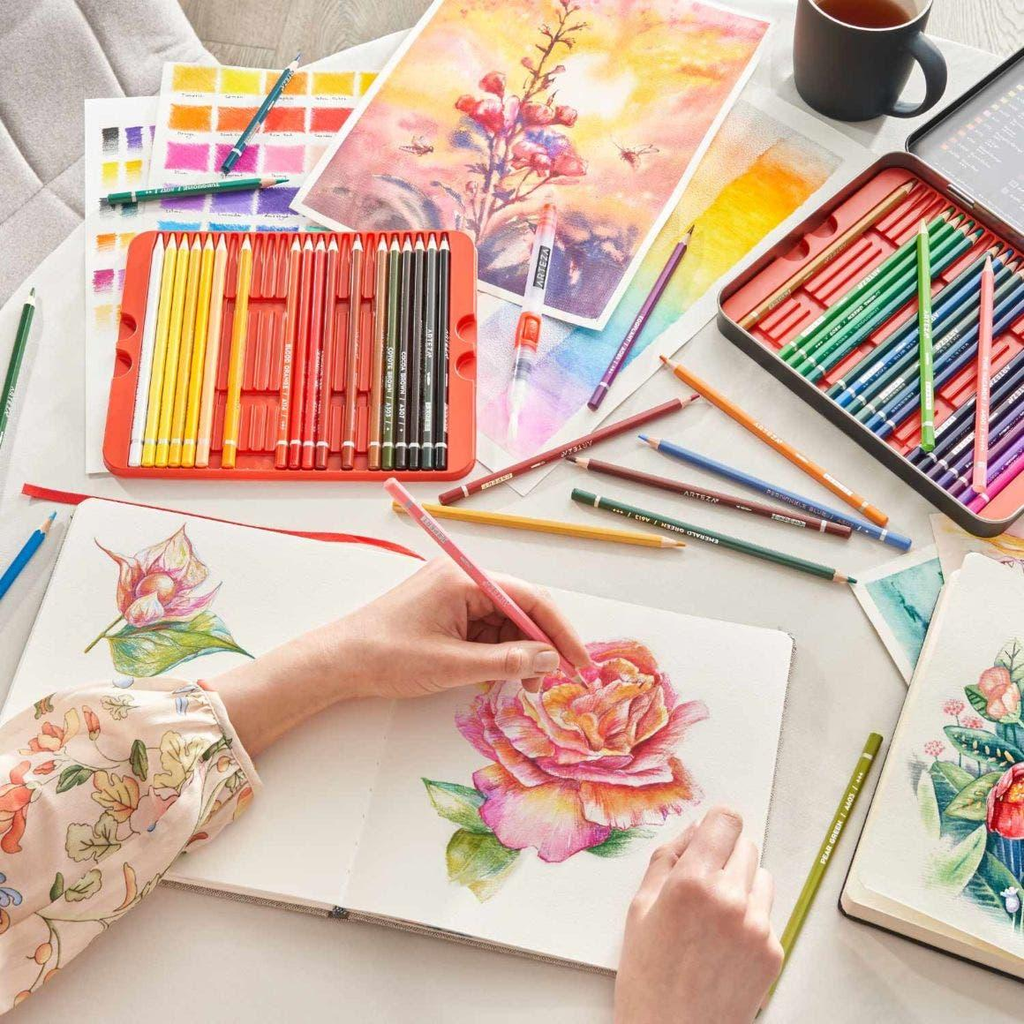
Colored pencils are perfect for creative hobbies, coloring, botanical drawings, flowers, landscapes, and detailed illustrations.
Prismacolor Premier Colored Pencils
A popular style of artist colored pencil to consider for blending, layering, and creating colorful artwork.

Prismacolor Premier Colored Pencils: These pencils are celebrated for their rich pigments and smooth application, making them ideal for blending and shading.
Faber-Castell Polychromos Colored Pencils
Another option for artists interested in detailed colored pencil work and layering techniques.

Faber-Castell Polychromos Colored Pencils: Known for their high-quality pigments and oil-based leads, these pencils offer excellent lightfastness and durability.
Before buying: Compare set sizes, individual colors, price, and the type of artwork you plan to create.
You don’t have to buy the largest set right away. A smaller selection can help you discover your favorite colors.
Fineliners and Ink Pens for Crisp Details
f you enjoy doodling, line art, lettering, or adding outlines to drawings, fineliners may be a great addition to your art supplies.
A drawing pen option to consider for detailed line work, illustrations, and outlining. Check the tip sizes available in the set.

Sakura Pigma Micron Pens: These pens are loved for their archival-quality ink and consistent flow, making them perfect for detailed line work and illustrations.
Another option for artists who like fine, precise lines.
If you plan to combine ink with watercolor or other wet mediums, check the manufacturer’s recommendations for your particular pen and paper.

Staedtler Pigment Liner: Known for their waterproof and lightfast ink, these pens are ideal for technical drawings and sketches.
Blending and Shading Tools
Want to create softer shadows and smoother transitions in your pencil drawings?
Tortillions and Blending Stumps
These tools can help blend graphite and charcoal. Different shapes and sizes may be useful for larger shaded areas or smaller details.
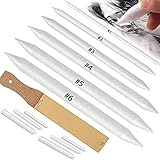
Tortillions and Blending Stumps: These tools are perfect for blending graphite and charcoal, helping artists create smooth gradients and textures.
Derwent Battery-Operated Eraser
A tool to consider if you frequently create detailed drawings and want help lifting small areas of graphite or creating highlights.
You can also experiment with simple pencil shading techniques before investing in additional tools.

Derwent Battery-Operated Eraser: This eraser allows for precise corrections and highlights, making it a favorite for detailed work.
Drawing Markers: A Fun Way to Explore Color
Markers can be wonderful for illustrations, lettering, bold designs, and colorful sketches.
When shopping for drawing markers, consider:
- Alcohol-based markers for blending and smooth color transitions
- Water-based markers for a different drawing experience
- Fine-tip markers for details and outlining
- Brush-tip markers for expressive strokes
Check whether the markers are compatible with your paper. Some can bleed through ordinary sketchbook pages, so testing on a spare sheet is a good idea.